

Rethinking Speed: Supporting Staff with Slow Processing Speed in Local Government
Updated: Oct 2, 2025
What Is Slow Processing Speed?
Slow Processing Speed (SPS) refers to the time it takes for a person to absorb, interpret, and respond to information. It’s a cognitive trait not a reflection of intelligence. In fact, many individuals with SPS are highly intelligent, creative, and capable of deep, strategic thinking. However, in fast-paced environments like local government, where quick decisions and rapid communication are often the norm, this trait can be misunderstood or undervalued.

Understanding the Concept
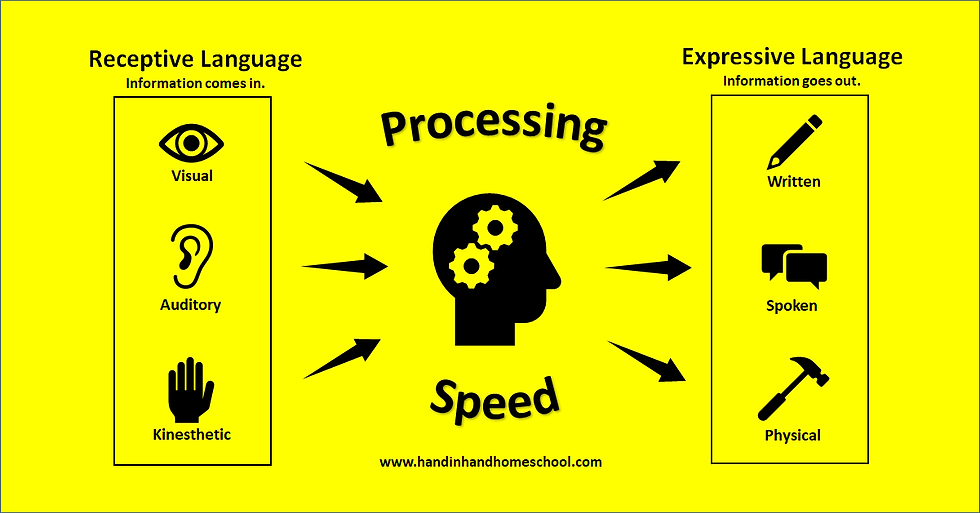
Think of processing speed as the brain’s “mental bandwidth.” Just as some internet connections are faster than others, some people’s brains process information more quickly. Others need more time to:
Understand what’s being said or asked
Organise their thoughts
Formulate a response
Execute a task
This doesn’t mean they’re less competent it simply means they operate on a different cognitive rhythm.
“Processing speed is not about how smart you are. It’s about how quickly you can take in and use information. Some of the most brilliant minds take longer to process because they’re thinking more deeply.” Dr. Ellen Braaten, Harvard Medical School
How It Shows Up at Work
In a local government setting, slow processing speed may affect:
Verbal communication: Needing more time to respond in meetings or during fast-paced discussions.
Written tasks: Taking longer to draft reports, emails, or policy documents.
Decision-making under pressure: Struggling with rapid-fire decisions, especially when multiple variables are involved.
Multistep instructions: Needing to break down complex tasks into smaller, manageable steps.
Task switching: Difficulty shifting quickly between different types of work or priorities.
These challenges can be particularly pronounced in roles that require constant multitasking, tight deadlines, or high volumes of information common in local authority environments.
It’s Often Misunderstood
Because SPS is invisible and not widely discussed, it’s often misinterpreted as:
Lack of engagement
Poor time management
Low motivation
Inattention or forgetfulness
This can lead to unfair performance assessments or missed opportunities for talented staff.
“People with slow processing speed are often working just as hard if not harder than their peers. They’re just doing it at a different pace.” Nicholas Bamonte, Psychology Advocate
It’s Common in Neurodivergent Profiles
Slow processing speed is frequently associated with:
ADHD: Especially the inattentive subtype
Autism Spectrum Disorder
Dyslexia and other learning differences
Anxiety and depression
Trauma or chronic stress
However, it can also occur independently, without any formal diagnosis. This is important for local government HR and line managers to understand support shouldn’t be contingent on a label.
“Slow processing speed is not a disorder. It’s a difference. And like all differences, it deserves understanding and accommodation.” Dr. Thomas E. Brown, Clinical Psychologist
Challenges Faced by Staff with Slow Processing Speed
Staff with slow processing speed (SPS) often face unique and invisible barriers in the workplace. These challenges are not due to lack of intelligence or effort, but rather the cognitive time required to absorb, interpret, and respond to information. In local government where deadlines are tight, meetings are frequent, and multitasking is common these challenges can be amplified.

1. Overwhelm in Fast-Paced Environments
Rapid-fire meetings, quick decision-making, and constant email traffic can leave slow processors feeling mentally overloaded. They may need more time to:
Understand what’s being discussed
Formulate a response
Navigate shifting priorities
This can lead to cognitive fatigue and disengagement, especially when they’re expected to “think on their feet” without adequate preparation.
“What might seem seamless to someone who thinks on their toes can feel like juggling a dozen balls to a slow processor.” Dr. Jennifer Keluskar
2. Time-Limited Tasks and Pressure
Deadlines, performance reviews, and timed assessments can be particularly stressful. Staff may struggle to complete tasks within rigid timeframes, not because they lack capability, but because their processing style requires more reflection and structure.
This pressure can lead to:
Increased anxiety
Reduced confidence
Avoidance of high-stakes tasks
3. Misinterpretation of Behaviour
Slow processors may be wrongly perceived as:
Disengaged or inattentive
Passive in meetings
Resistant to change
Poor communicators
These misinterpretations can affect career progression, team dynamics, and self-esteem.
“People with slow processing speed are often working just as hard if not harder than their peers. They’re just doing it at a different pace.” Nicholas Bamonte
4. Emotional Toll
The constant need to “keep up” can lead to chronic stress, burnout, and feelings of inadequacy. Many individuals internalise these struggles, believing they’re failing, when in reality they’re simply operating in a system that doesn’t accommodate cognitive diversity.
The Hidden Strengths and Opportunities
Despite the challenges, slow processing speed is often accompanied by powerful strengths that are especially valuable in local government roles.
1. Deep, Analytical Thinking
Slow processors tend to think carefully and thoroughly. They’re less likely to jump to conclusions and more likely to consider multiple perspectives, making them excellent strategic thinkers and policy developers.
“It will take me longer, but I’ll get there.” Anonymous contributor with SPS
2. Attention to Detail
Because they process information methodically, slow processors often notice nuances others miss. This makes them well-suited to roles involving compliance, safeguarding, planning, and data analysis.

3. Thoughtful Communication
Rather than reacting impulsively, slow processors often offer well-considered insights. Their contributions may be less frequent, but they’re often more impactful.
“Albert Einstein described himself as a slow thinker yet his contributions reshaped science.”
4. Creative and Strategic Problem-Solving
Many slow processors excel in creative fields, systems thinking, and long-term planning. Their ability to reflect deeply allows them to connect ideas in innovative ways.
5. Resilience and Empathy
Having navigated misunderstanding and pressure, many individuals with SPS develop strong emotional intelligence, patience, and empathy qualities that enhance leadership and team cohesion.
What Local Government Can Do to Support Staff with Slow Processing Speed
Local authorities have a unique opportunity to lead by example in creating cognitively inclusive workplaces. Supporting staff with slow processing speed isn’t just about compliance it’s about unlocking the full potential of thoughtful, detail-oriented, and strategic thinkers who thrive when given the right environment.
1. Adjust Workflows and Expectations
Why it matters: Rigid timelines and reactive work cultures can unintentionally exclude staff with SPS. Adjusting workflows allows everyone to contribute meaningfully.
How to do it:
Build in buffer time for tasks that require analysis or reflection.
Avoid urgency culture for non-critical work distinguish between “urgent” and “important.”
Provide written instructions alongside verbal briefings to reduce cognitive load and allow for review.
Example: When assigning a policy review, offer a written brief with deadlines spaced out over stages (e.g., reading, analysis, feedback) rather than expecting instant turnaround.
2. Rethink Meetings and Communication
Why it matters: Meetings often favour fast talkers. SPS staff may need more time to process spoken information and formulate responses.
How to do it:
Share agendas and materials in advance to allow for preparation.
Avoid rapid-fire questioning use round-robin formats or written follow-ups.
Use asynchronous tools like shared documents, email summaries, or recorded briefings.
Example: After a strategy session, circulate a summary and invite written reflections over the next 48 hours to ensure all voices are heard.

3. Provide Reasonable Adjustments
Why it matters: SPS is often invisible and undiagnosed. Reasonable adjustments can level the playing field and reduce stress.
How to do it:
Offer extended time for assessments, reports, or decision-making tasks.
Use assistive technology such as speech-to-text, mind-mapping tools, or task organisers.
Provide templates or scaffolds for complex tasks to reduce cognitive load.
Example: For a grant application, offer a structured template with prompts and examples to guide the writing process.
4. Train Managers
Why it matters: Line managers are gatekeepers of inclusion. Their awareness and empathy directly affect staff wellbeing and performance.
How to do it:
Educate leaders on neurodiversity, cognitive differences, and SPS.
Encourage strengths-based supervision focus on what staff do well, not just speed.
Promote psychological safety create space for staff to say “I need more time” without stigma.
Example: Include SPS scenarios in management training modules and offer coaching on inclusive leadership.
5. Embed Inclusive Policies
Why it matters: Systemic change requires policy-level support. Inclusion must be baked into HR frameworks, not left to individual discretion.
How to do it:
Include SPS in neurodiversity awareness training and equality impact assessments.
Ensure HR policies allow for flexible working, phased deadlines, and cognitive accommodations.
Create feedback loops where staff can safely share what’s working and what’s not.
Example: Add a section on cognitive processing styles to your reasonable adjustments policy and ensure it’s visible in onboarding materials.

What Individuals Can Do to Help Themselves
Living and working with slow processing speed can be challenging, especially in environments that value speed over depth. But with the right strategies, mindset, and support, individuals with SPS can thrive bringing unique strengths to their teams and communities.
1. Self-Acceptance and Communication
Why it matters: The first step is recognising that SPS is a cognitive difference, not a flaw. Self-acceptance reduces internal pressure and opens the door to constructive conversations.
Strategies:
Be open with colleagues and managers about your processing style. You don’t need a diagnosis to advocate for yourself.
Use phrases like:
“I’d like to take a moment to think that through.”
“Can I come back to you with a considered response?”
“I process best with written information could you follow up by email?”
Tip: Practice these phrases so they feel natural and confident.
2. Use Technology to Reduce Cognitive Load
Why it matters: Digital tools can help structure thinking, manage time, and reduce overwhelm.
Tools to try:
Mind-mapping apps (e.g., MindMeister, XMind) to visualise ideas
Timers and task managers (e.g., Pomodoro apps, Todoist) to break work into manageable chunks
Note-taking tools (e.g., Notion, OneNote) to capture thoughts and organise information
Tip: Choose tools that feel intuitive don’t overcomplicate your system.
3. Practice and Preparation
Why it matters: SPS often improves with familiarity. Preparing in advance can reduce anxiety and boost confidence.
Strategies:
Rehearse responses for meetings or presentations write down key points or practice aloud.
Use mock scenarios to prepare for interviews, assessments, or time-sensitive tasks.
Request agendas in advance so you can prepare your contributions.
Tip: Build a “prep routine” before key meetings review materials, jot down ideas, and set intentions.

4. Prioritise Wellbeing
Why it matters: Processing speed is affected by physical and emotional health. Supporting your body supports your brain.
Strategies:
Sleep: Aim for consistent, quality rest processing speed drops significantly with sleep deprivation.
Nutrition: Eat brain-friendly foods (e.g., omega-3s, whole grains, leafy greens).
Exercise: Regular movement boosts cognitive function and reduces stress.
Mindfulness: Practices like meditation or breathing exercises can improve focus and reduce overwhelm.
Tip: Treat wellbeing as a non-negotiable part of your work toolkit.
5. Focus on Strengths
Why it matters: SPS often comes with powerful strengths depth, creativity, empathy, and strategic thinking.
Strategies:
Identify your cognitive strengths are you a systems thinker, a detail spotter, a reflective leader?
Advocate for tasks that align with your strengths (e.g., research, planning, writing, mentoring).
Celebrate your contributions even if they come after the meeting, they still matter.
“It will take me longer, but I’ll get there.” Anonymous contributor with SPS
Statistics and Insights
Up to 20% of gifted individuals may have slower processing speeds, showing that SPS is often linked with high intelligence and creativity.
Processing speed can be affected by sleep deprivation, anxiety, and multitasking even in neurotypical individuals.
Slower processors often excel in depth, creativity, and strategic thinking not speed.

Conclusion: Rethinking Speed in Local Government
In a world that often equates speed with competence, it’s time for local government to challenge that narrative. The public sector thrives on complexity, nuance, and long-term thinking qualities that slow processors often excel in. By recognising and supporting staff with slow processing speed, councils can unlock deeper insights, more thoughtful decision-making, and truly inclusive workplaces. This isn’t just about fairness it’s about effectiveness. When we create environments where all cognitive styles are respected, we build teams that are more resilient, more creative, and more representative of the communities they serve.
“Slower can also mean deeper and this is a trait worth celebrating.” Dr. Jennifer Keluskar
Let’s move beyond the myth that fast equals smart. Let’s build a local government culture that values reflection as much as reaction, and depth as much as speed.


